
Marijuana entrepreneurs need to be aware of industry challenges
By Kevin Gale
Florida’s overwhelming approval of Amendment 2—and other votes nationally—during the November 2016 elections might signal more of what’s ahead in the field of cannabis than Donald Trump proposing an anti-cannabis senator to be attorney general.
The passage of Amendment 2 should have a rippling economic impact, says Daniel Sparks, director of government affairs for BioTrackTHC, a Fort Lauderdale company that provides software for the cannabis industry.
“Real estate, construction, legal, medical and insurance professionals can all expect an increase in demand for their services with the implementation of an expanded medical marijuana program,” he says. Commercial real estate prices could rise like they did in Denver. Electricians, carpenters and A/C technicians would find work.
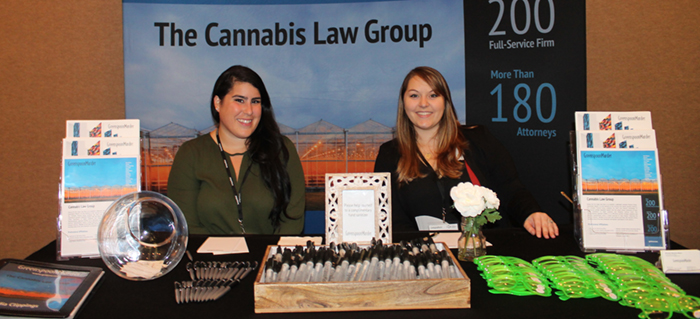
Lawyers, accountants and consultants joined other businesses at the Legal Learning Series Cannabis Law and Business Conference, which was held four days before the election. While zoning issues and upcoming state regulations were hot topics, the biggest uncertainty remains federal law vs. state laws. Marijuana is still classified by the Drug Enforcement Agency as a Schedule I illegal drug—right up there with heroin.
Trump’s nominee for U.S. attorney general, Sen. Jeff Sessions, R-Ala., has made a number of anti-marijuana comments over the years. However, there’s optimism in the cannabis industry that the election created an irreversible trend.
Eight marijuana proposals made ballots nationally and the only state voting no was Arizona. The nation’s most populous state, California, approved recreational marijuana use while Florida, the nation’s third-most populous, approved much broader use of medical marijuana.
“We are optimistic that there will not be any setback in what exists today with 30 states having some forms of legalized marijuana, medical or recreational. It’s highly unlikely that the federal government would want to take on the battle of what’s been legalized by 150 million citizens of the United States,” says Gerald Greenspoon, managing shareholder of Greenspoon Marder. His Fort Lauderdale-based law firm is notable for being the first top 200 U.S. law firm to establish a cannabis practice and was the presenting sponsor of the conference. (SFBW was a media sponsor.)
Florida’s Department of Health still has to create regulations that cover identification cards, the qualifications of caregivers and registration of treatment centers. The first cards must be issued by Sept. 3.
While the amendment listed particular conditions (such as cancer, glaucoma and HIV) that would allow a doctor to give a recommendation for cannabis consumption, physicians have latitude for comparable debilitating medical conditions. The website for docmj.com says those conditions could include anxiety, arthritis, back pain, diabetes, migraines, muscle spasms and chronic pain.
Nicole van Rensburg, a South Floridian whose family opened Midwest Compassion Center, a marijuana dispensary in suburban Chicago, is looking at Florida as an expansion opportunity.
Like Greenspoon, she expects the federal government will take a hands-off approach.
Ins and Outs of Business
One difficulty for entrepreneurs in Florida will be figuring out a realistic business plan.
A lot of the licensees in Illinois find it takes much longer than expected to be profitable, says van Rensburg.
She has found that patients typically spend $350 to $400 a month, visit about two times a month and spend 20 minutes even if they know what they want.
“They want to talk about the experience of the products they tried. They are not interested in the bum’s rush of just getting in and out,” she says. About 60 percent of her business is in what’s called flowers, or buds, compared with concentrates. She initially expected to carry 20 to 30 distinct items for sale, but ended up with 100.
“Patients are fiercely loyal to a particular product,” she says. They often don’t even want to buy the same strain of cannabis produced by a different grower.
Kaya Holdings CEO Craig Frank said at the conference that there are three major opportunities in the cannabis industry: retail, growing plants and using the plants to create products such as oils, extracts and edibles.
Kaya, which has stores in Oregon, has become vertically integrated after running into supply issues.
About half of its products are flowers. Oils with cannabis extract are becoming more popular, but some consumers find high concentrations of THC are too overpowering, he says.
Banking, Zoning Issues
Tom Quigley, CEO of Florida Cannabis Coalition, created The Gluu, a Tampa company that distributes non-cannabis products, such as pipes, rolling papers and vaporizers. He was among several speakers who talked about having bank accounts frozen because of their association with the industry.
Joseph De Palma of CannaConnection Events in Denver, who is planning a Science of Cannabis Summit in Miami in May, said he has had about seven bank accounts shut down because he does business with cannabis companies.
State-chartered banks in areas where cannabis has been legalized often are friendlier than federally chartered banks, but some charge 10 or 15 percent fees, he said. Credit card processors and factors often charge higher rates as well.
Frank says some landlords also want to charge 25 to 30 percent premiums, saying cannabis-related businesses fall into a high-risk category.
He predicts there will be a shakeout in the industry because the economics might not be sustainable. For example, what happens if the price of marijuana drops from $2,000 a pound to $1,200?
Deep-pocketed investors are coming into the field, Quigley said. One company has raised $93 million and another has raised $100 million. He knows investment bankers who are meeting with family offices to discuss opportunities.
Joshua Goldstein, a shareholder with Greenspoon Marder, said the firm has about 150 cannabis clients and the most successful are vertically integrated. Multiunit operators have a better chance at success since there are so many economies of scale.
“Most of the pioneers that got into this business a few years ago have either exited or are exiting,” he says.
A major challenge for the cannabis industry is that it can deduct only the cost of goods sold on federal tax returns, which means they pay 70 to 80 percent of their net bottom line on taxes, said Mary Galinas, a principal with the Daszkal Bolton accounting firm. They can’t deduct rent and benefits.
One strategy is to segregate non-cannabis business lines from legal products, such as vaporizers, but that has to be done very carefully—there is a high risk of being audited, she said.
Zoning issues were another panel topic.
Rosa Davis, a Miami-Dade County senior planner, said commissioners have expressed concern about safety and security when it comes to dispensary locations.
Alicia J. Lewis, an associate with Greenspoon Marder, said cannabis-related locations might need a special exception or conditional use that requires board or commission approval.
There also might be requirements to be located no less than a certain distance from a school or church, she said. In a worst-case scenario for entrepreneurs, regulations in a city could be so strict that only a handful of locations might be available.
The bottom line? While there seems to be plenty of entrepreneurial opportunity in the cannabis field, it also comes with plenty of potential challenges and obstacles. ↵