
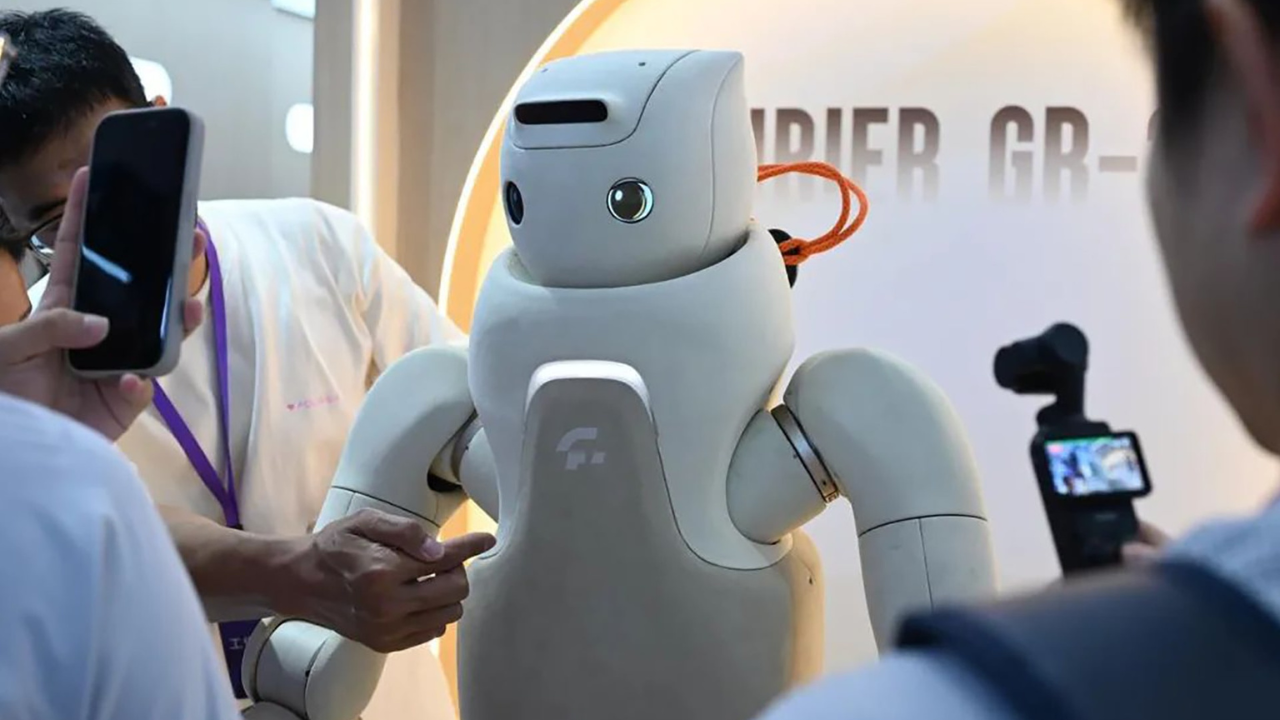
Beijing became the epicenter of global robotics innovation this August as the World Robot Conference (WRC 2025) drew thousands of industry leaders, researchers, and enthusiasts to the Beiren Etrong International Exhibition and Convention Center. The five-day event, held August 8–12, showcased the latest in humanoid robotics, embodied intelligence, and applications poised to transform everyday life.
With the theme “Making Robots Smarter, Making Embodied Agents More Intelligent,” the conference unveiled more than 1,500 exhibits from over 200 companies, including 100 global product debuts. Among the most eye-catching was a record showing of humanoid robots: nearly 50 manufacturers presented machines that could walk, interact, play music, and even recognize human expressions.
This year’s emphasis on embodied intelligence underscored a shift in robotics from factory floors to human-centered applications. Robots on display weren’t just industrial tools—they were care assistants, service providers, and performers designed to integrate into daily life.
Beijing’s rapid rise as a robotics hub added weight to the conference’s message. The city’s robotics industry revenue jumped 50% year-on-year in 2024 and saw another 40% growth in the first half of 2025, making it China’s leader in humanoid manufacturing, surgical robot registrations, and high-end robotics SMEs.
Following the conference, the World Humanoid Robot Games (Aug. 15–17) brought a playful yet revealing dimension. More than 280 teams from 16 countries sent robots into competitions ranging from football and track to table tennis and cleaning services. While some robots stumbled or stalled, the games highlighted both how far humanoid technology has come—and how much work remains.
The broader takeaway from WRC 2025 is clear: robotics is accelerating from prototype to mainstream. With applications in healthcare, eldercare, customer service, and entertainment, robots are on the cusp of becoming everyday collaborators. Challenges like cost, safety, and reliability remain, but the momentum—driven by massive investment and international collaboration—is undeniable.
As the robotics industry shifts from spectacle to scalable solutions, WRC 2025 may be remembered as a tipping point: a moment when robots moved from the sidelines into the center of our shared future.