
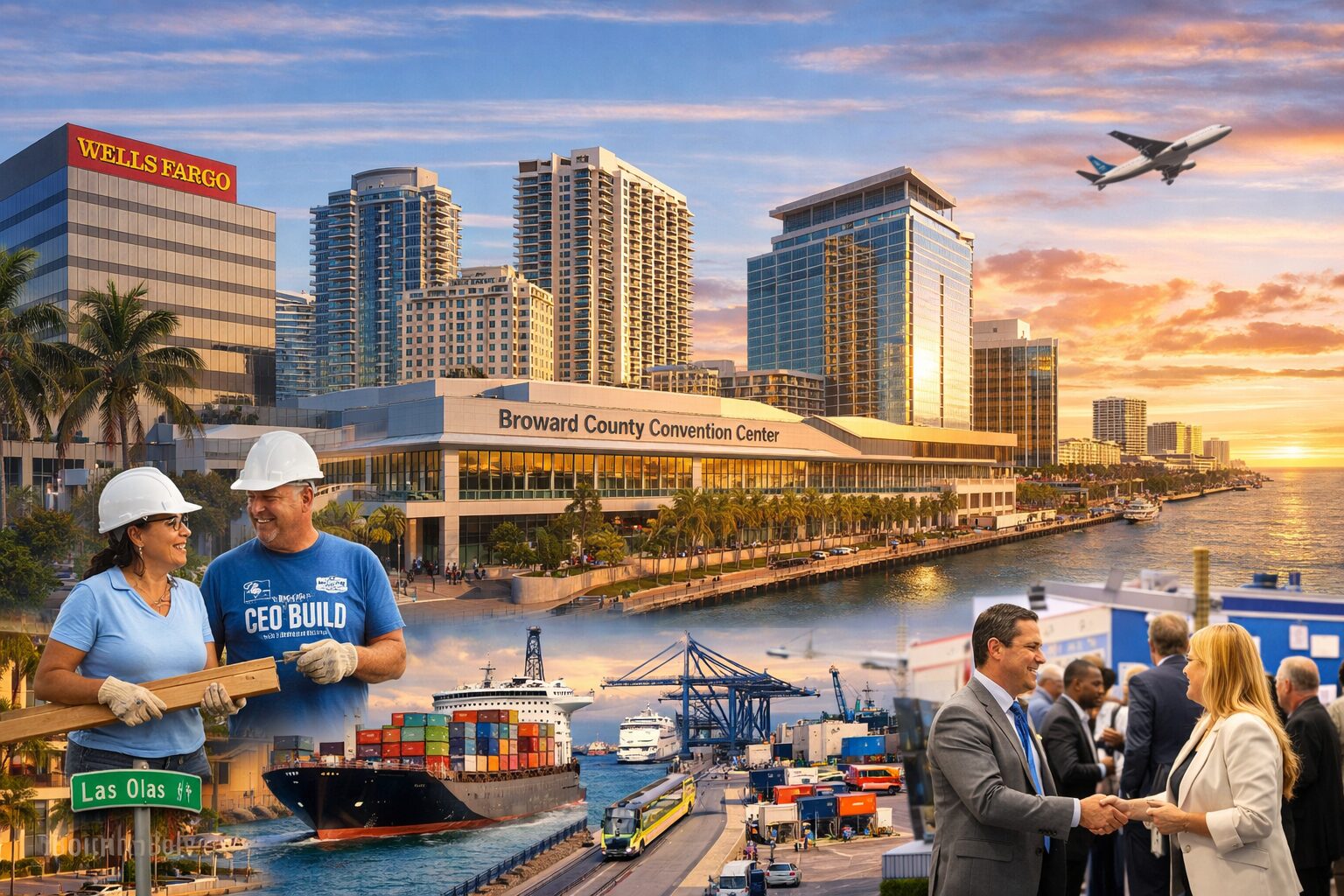
South Florida’s business ecosystem continues to generate positive signals as 2026 unfolds, with regional commerce buoyed by infrastructure expansion, meaningful corporate movements, and renewed visitor demand. From finance and hospitality to networking platforms and visitor-driven spending, Broward County is demonstrating both resilience and strategic direction in this early stretch of the year.
Institutional Financial Shifts and Regional Talent Impact
One of the most significant business developments in South Florida in the last week comes from the financial sector: Wells Fargo & Co. announced it is relocating its wealth-management headquarters to West Palm Beach, a move that will bring roughly 100 senior executives and nearly 50,000 square feet of leased space to Palm Beach County and signal continued confidence in the Sunbelt as a wealth hub. Though the headquarters landing point is outside Broward, the broader strategic implications are regional — reinforcing the strength of the talent pool and business climate that South Florida counties, including Broward, are cultivating.
For Broward executives and employers, this move underscores an important dynamic: the reshaping of financial services in the region is accelerating, and competition for skilled professionals continues to increase as institutional players define new operational footprints across the Tri-County area.
Broward & Beyond Business Conference Returns
The Broward & Beyond Business Conference is set to reconvene at the Greater Fort Lauderdale/Broward County Convention Center this year, signaling a renewed focus on ecosystem building and small business engagement. Long positioned as one of the most practical convenings for entrepreneurs and growth-oriented companies, the conference reflects sustained efforts — by both public and private stakeholders — to bolster connectivity and business infrastructure.
Paired with the recent opening of the Omni Fort Lauderdale Hotel, which added more than 800 rooms and significant meeting space to the county’s convention inventory, Broward’s capacity to host large-scale business gatherings, industry forums, and trade events is improving measurably — a competitive advantage that local economic development leaders have been cultivating.
Visitor Demand Boosts Local Commerce
Consumer demand pressures have also drawn attention in recent days. Anecdotal coverage from regional broadcast outlets shows a surge of visitors to Fort Lauderdale around major collegiate sporting events, with packed restaurants, busy hotels, and elevated foot traffic along Las Olas Boulevard and beachfront districts — translating into immediate economic spill-over for local hospitality, food and beverage, and retail sectors.
While not yet captured in full official tourism data, these episodic demand spikes suggest that Broward’s legacy as a destination economy continues to generate short-term revenue boosts that complement broader, long-term growth goals.
Continued Small Business and Networking Activity
Across the county, smaller but influential gatherings like expos and professional networking events continue to populate business calendars. Recent expos at the Broward County Convention Center have provided local firms and entrepreneurs a timely platform to showcase offerings, expand professional networks, and spark collaborations for 2026 — a reminder that ground-level engagement remains a foundational layer of Broward’s business ecosystem.
Long-Term Engines Remain a Strategic Advantage
Beyond the week’s headlines, Broward’s foundational economic drivers — most notably Port Everglades — continue to anchor regional commerce. Port Everglades remains one of South Florida’s chief economic engines, generating tens of billions in annual economic output and supporting hundreds of thousands of jobs across logistics, trade, and tourism. Its scale and performance provide crucial stability for related sectors, from industrial real estate to service-oriented supply chains.
Strategic infrastructure projects slated for the next decade — such as transit expansions connecting Fort Lauderdale–Hollywood International Airport and major freight corridors — will further entrench Broward’s position as a multimodal hub, though formal reporting on those developments has emerged over a longer timeline.