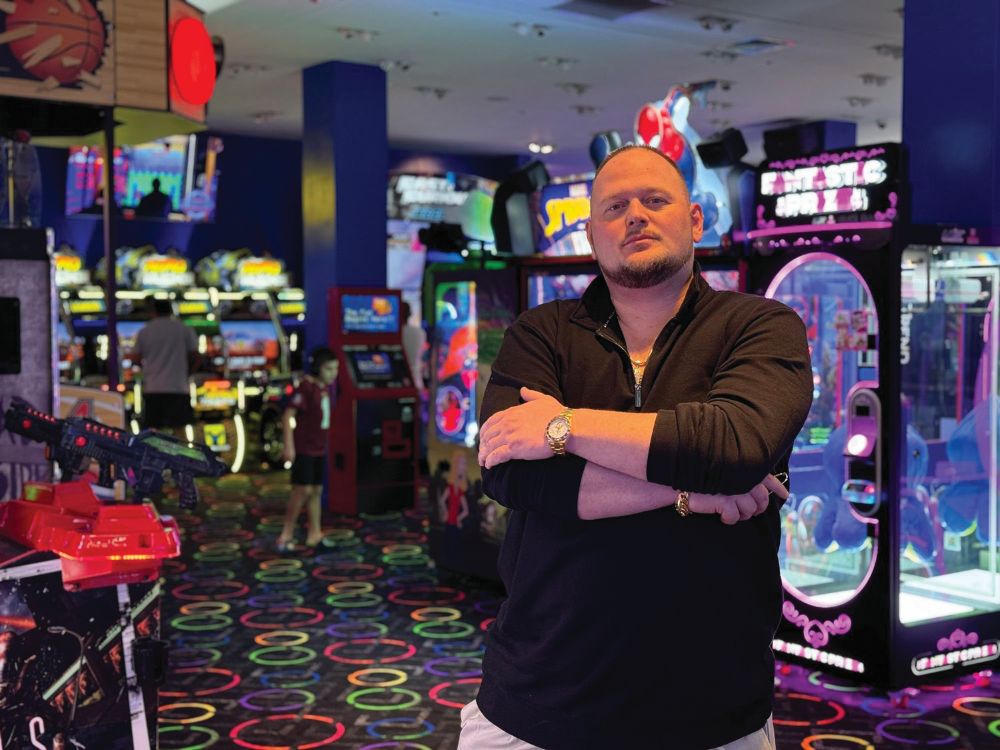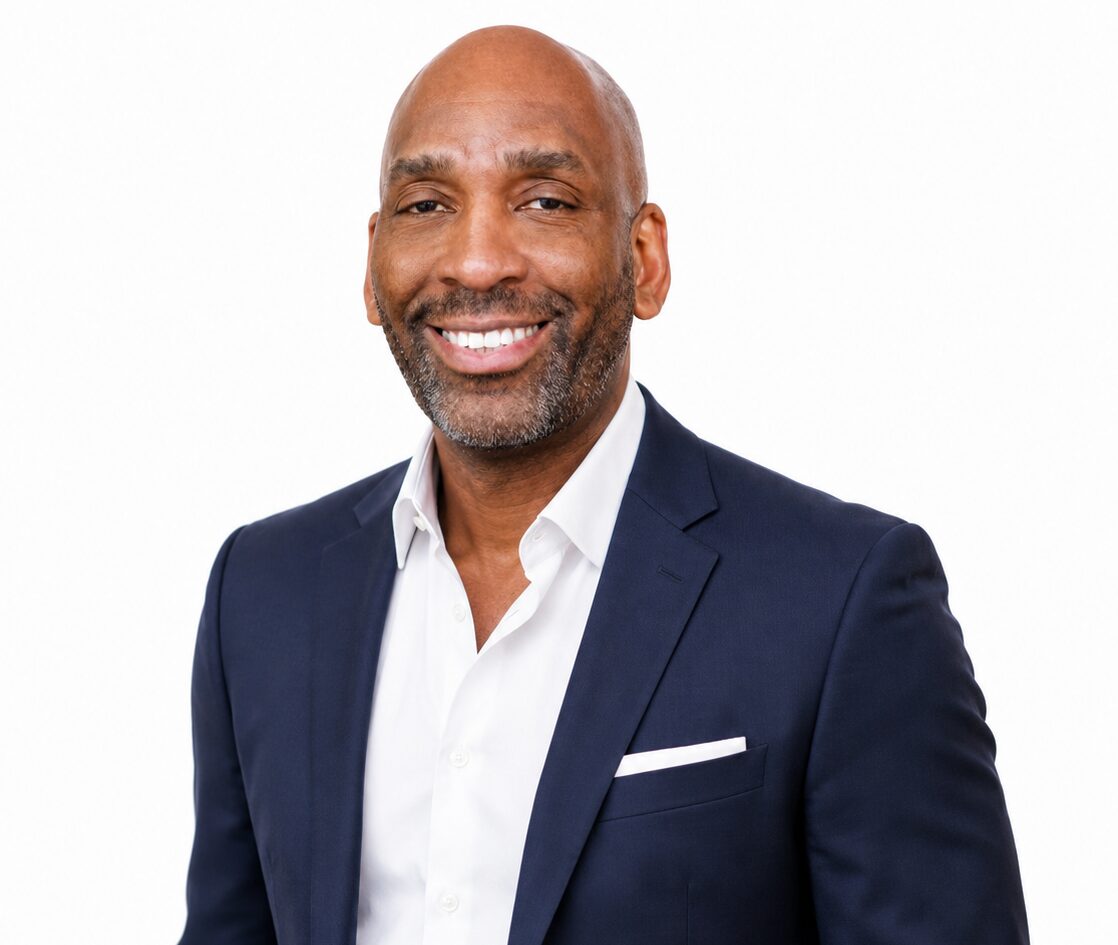

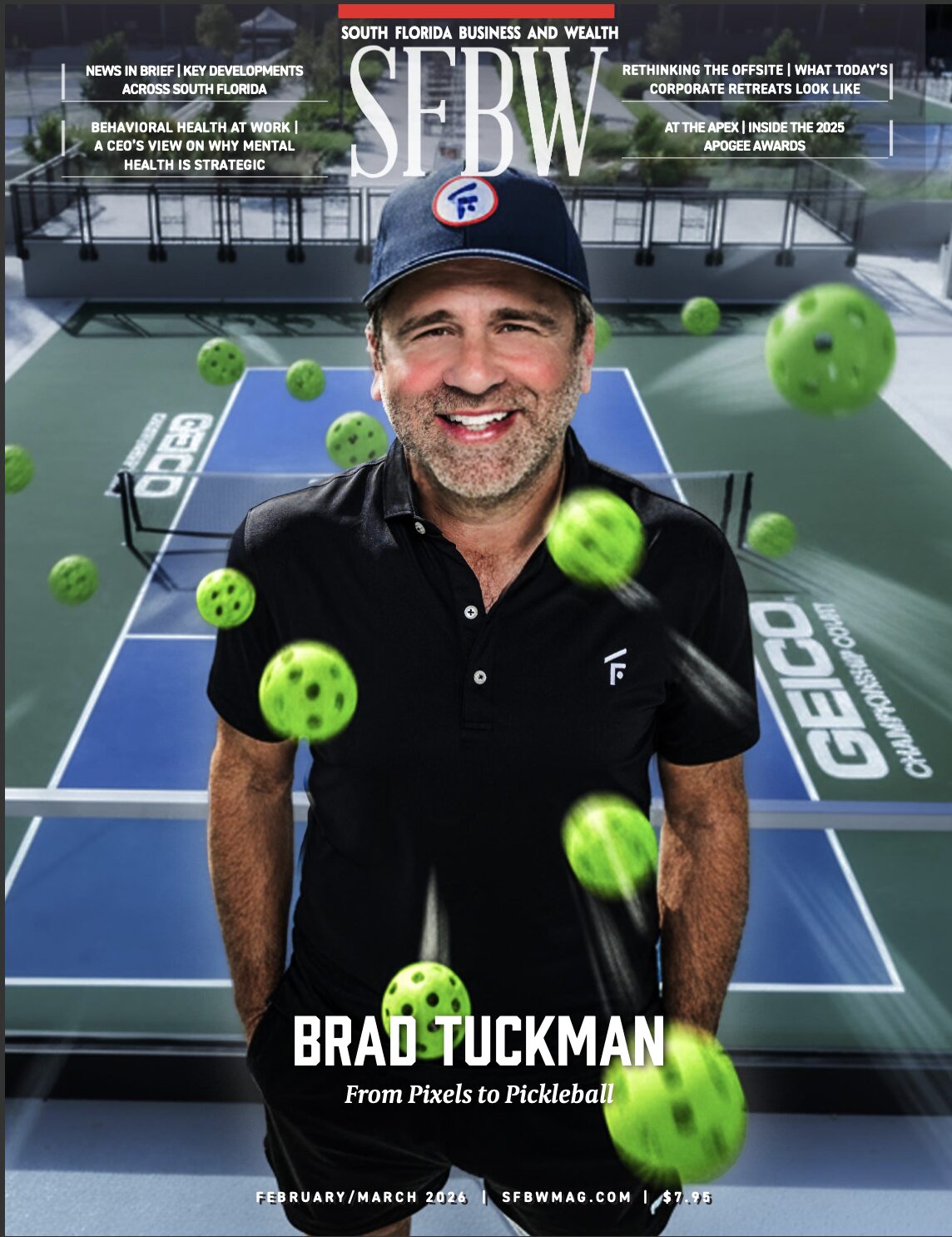
For much of his career, Brad Tuckman built businesses that lived in the cloud. Digital production. Creative systems. Global teams that could be spun up, aligned, and deployed across continents with speed and precision. Today, his most ambitious venture is unapologetically physical: The Fort, a sprawling pickleball, hospitality, and community destination in Fort Lauderdale that is fast becoming a case study in second acts done right.
The pivot was neither impulsive nor nostalgic. It was earned.
“I had to remind myself where I came from,” Tuckman says, reflecting on the shift from an asset-light creative empire to a capital-intensive destination business. “In the later years of my previous business, I was used to having a global team of experts I could pull into a room, align on strategy, and trust that execution would follow quickly. When I started The Fort, that muscle memory didn’t apply.”
That dissonance was deliberate. After selling CreativeDrive to Accenture following more than two decades of building digital production companies, Tuckman found himself at a rare crossroads. The financial outcome was strong. The identity shift was harder.
“In many ways, it felt like going back 30 years to the early days, when everything was a grind and progress took time,” he says. “What I’ve come to appreciate again is that the journey is often more meaningful than the destination.”
A Builder’s DNA
Tuckman’s entrepreneurial instincts were formed early, long before pickleball entered the picture.
A graduate of Rochester Institute of Technology with a background in photographic illustration, he built early businesses that evolved alongside digital imaging and internet technologies, operating under names such as Studio FX and later OneKreate. Those ventures combined creative services with a meaningful technology offering that grounded the business and propelled its growth, allowing it to adapt as the industry changed and remain resilient over time. “My career didn’t start with some grand plan,” he shares. “I said yes to opportunities, showed up early, and tried to outwork everyone around me.”
That approach eventually culminated in CreativeDrive, a global creative services platform that scaled across markets and disciplines. Along the way, Tuckman learned how to build systems that could grow without breaking, how culture travels faster than org charts, and how small inefficiencies multiply at scale.
“I learned quickly that if you treat people well and deliver results, doors open—even if you don’t have everything figured out yet,” he says.
Those lessons now underpin The Fort, even as the industry could not be more different. “The biggest adjustment has been learning to let the business breathe,” he says. “I can see very clearly where The Fort needs to go, but it’s now a living, breathing entity, really several businesses under one roof.” Pickleball is the entry point, not the endgame. The Fort blends sport, hospitality, wellness, retail, and events within a single campus, anchored by a public-private partnership with the City of Fort Lauderdale. It also serves as the headquarters and training facility for the Association of Pickleball Players, giving it national relevance from day one.
Calculated Risk, Grounded Vision
Like most projects of scale, The Fort was never risk-free. The greatest unknown was timing. “The biggest perceived risk when we started the process over five years ago was timing,” Tuckman says. “Were we too early?” What mitigated that risk was proximity without emotional bias. Tuckman was close enough to pickleball to recognize its momentum, but far enough to see its limitations as a standalone business. “Pickleball alone wouldn’t support the scale we envisioned,” he explains. “We knew we had to layer in additional services, amenities, programming, and private and corporate events to truly de-risk the model.” That discipline mirrors how he built his creative businesses: study the data, walk the landscape, learn from adjacent categories, and hire people who fill your blind spots. The Fort’s ownership group spans data, operations, and large-scale food and beverage, a deliberate counterbalance to any single-founder tunnel vision.
“Culture matters. Kindness matters. Listening matters,” Tuckman says. “If you lose the trust of your customers or members, you lose even faster.”
Learning in Public
Not every assumption held. One early miscalculation was underestimating how much behavioral change the model required. “Many players were coming from a public park mindset into a more structured, country-clubstyle environment,” he says. “At the core, they still wanted the same thing: to play with friends, meet new people, and have fun, just in a more organized and predictable way.” That organization, particularly around skill ratings and court flow, proved more complex at scale than anticipated. Communication quickly emerged as an operational challenge.
“We can send emails, post signs, push notifications, and send texts,” Tuckman says. “But we can’t force people to read them.”
Rather than resist, the team adapted. Systems were simplified. Education improved. The model continues to evolve in real time, guided by data and member behavior rather than ego. It is a reminder, Tuckman notes, that no amount of vision replaces daily execution.
Vision Versus Reality
Running The Fort means managing parallel businesses with different rhythms and demands. Teaching pros, chefs, facilities teams, event managers, and retail staff all operate under one roof, but not with one playbook.
“The vision is the North Star,” Tuckman says. “Operations are the reality you manage every day.”
Financial discipline, right-sizing teams, and accepting early inefficiencies are part of the process. “You have to accept that you’ll make mistakes, waste some money, and learn quickly,” he says. “The goal is to grow into the vision, not chase perfection before you’re ready.”
That realism is also why The Fort has resonated with corporate users. Companies are increasingly using the space for employee perks, wellness programs, leadership retreats, social leagues, and B2B networking. In a business climate where culture and retention matter as much as compensation, The Fort functions as a third place, neither office nor home, where teams connect through shared experience.
“I wasn’t interested in just another office space,” Tuckman says. “I wanted to build an environment where people enjoyed being there and felt respected.”
A Second Act, Fully Chosen
For founders contemplating life after an exit, Tuckman is candid. Experience changes ambition. It also clarifies motivation.
“I’m happiest when I’m building something that’s truly mine,” he says. “That realization was just as valuable as anything financial.”
Family has been a grounding force throughout that journey, offering perspective as the pace and stakes changed. His Fort Lauderdale home on Mola Avenue, designed with architect Max Strang, reflects the same problem-solving mindset that defines his business life. The now-iconic cantilevered waterfront home was shaped by practical constraints, flooding concerns, privacy, and a willingness to invest in doing things the right way rather than the easy way.
“Building something worthwhile is never linear,” Tuckman says. “Each act teaches you something new. The key is staying open to the learning and honest with yourself about why you’re doing it in the first place.”