
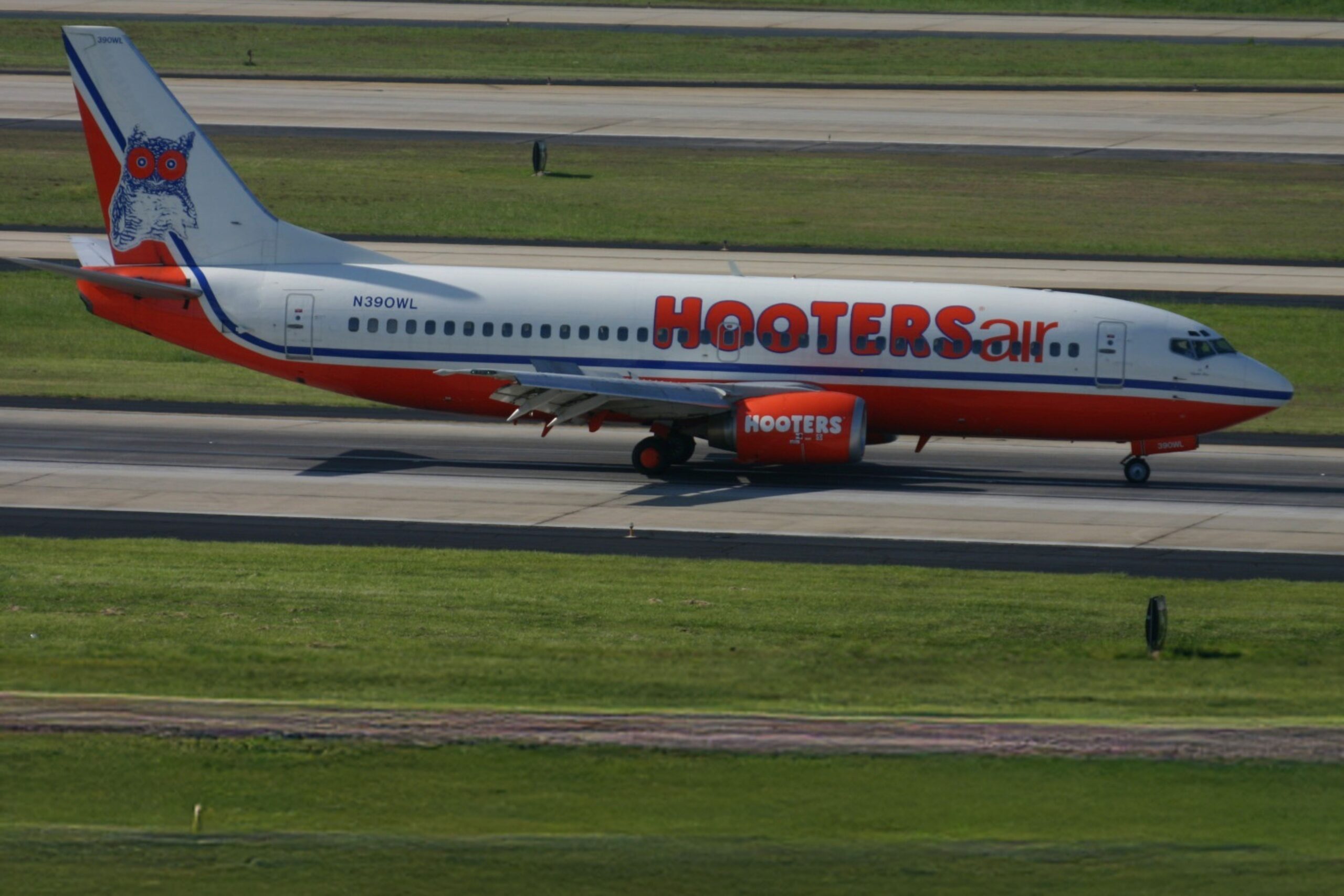
It sounded like a punchline. In the early 2000s, a restaurant chain best known for chicken wings and orange shorts announced it was launching an airline. But for a brief, improbable window, Hooters Air was a real commercial carrier—flying out of Myrtle Beach, serving passengers across the East Coast, and embodying a uniquely Floridian blend of marketing bravado and business risk.
The concept took flight in 2003, the brainchild of Robert H. Brooks, then owner of the Hooters restaurant franchise and chairman of Hooters of America. Brooks had recently purchased Pace Airlines, a charter company based in Winston-Salem, North Carolina, and saw an opportunity to turn it into something more. His vision: merge the sex appeal and hospitality of Hooters with the convenience of low-cost air travel.
Hooters Air debuted with two Boeing 737s, decked out in the restaurant’s signature orange and white color scheme. Inside, passengers were greeted not only by flight attendants but also by two “Hooters Girls” on every flight—whose role was purely entertainment. They didn’t handle safety briefings or serve drinks; instead, they mingled with passengers, posed for photos, and handed out branded merchandise. The experience was part budget carrier, part marketing spectacle.
The airline’s main base was in Myrtle Beach, South Carolina, a natural fit given Hooters’ coastal brand identity. Routes included cities like Atlanta, Newark, and Allentown, catering largely to golfers, spring breakers, and Hooters loyalists. Fares were competitive, and the onboard atmosphere aimed for fun over formality. “We’re not a bunch of goofballs,” Brooks told reporters at the time. “We’re serious about running a good airline, but we also know how to make it enjoyable.”
Behind the novelty, there was a genuine business logic. After the shock of 9/11, air travel demand was rebounding, and smaller carriers were experimenting with ways to stand out. Hooters Air hoped its playful image would differentiate it from no-frills rivals like AirTran and JetBlue. The airline even secured Department of Defense contracts, flying military personnel on charter routes—a surprising revenue source that temporarily kept it aloft.
But the turbulence came fast. Rising fuel costs, intense price competition, and limited brand crossover between Hooters’ restaurant customers and repeat air travelers strained the business model. Despite Brooks’ personal investment—reportedly more than $40 million—the airline never reached profitability. By 2005, routes were being quietly cut. In April 2006, Hooters Air ceased operations, citing “the high cost of fuel and lack of demand for leisure travel.”
When Brooks died unexpectedly later that year, the dream of reviving the airline died with him. The planes were sold, the brand grounded, and Hooters Air slipped into aviation lore as one of the boldest—and quirkiest—marketing experiments of the 2000s.
Still, for those who remember it, Hooters Air captured a fleeting optimism in post-9/11 America: a time when even a wing joint could try to fly high. As one former executive put it years later, “We weren’t just selling tickets. We were selling an experience—and for a while, it really soared.”