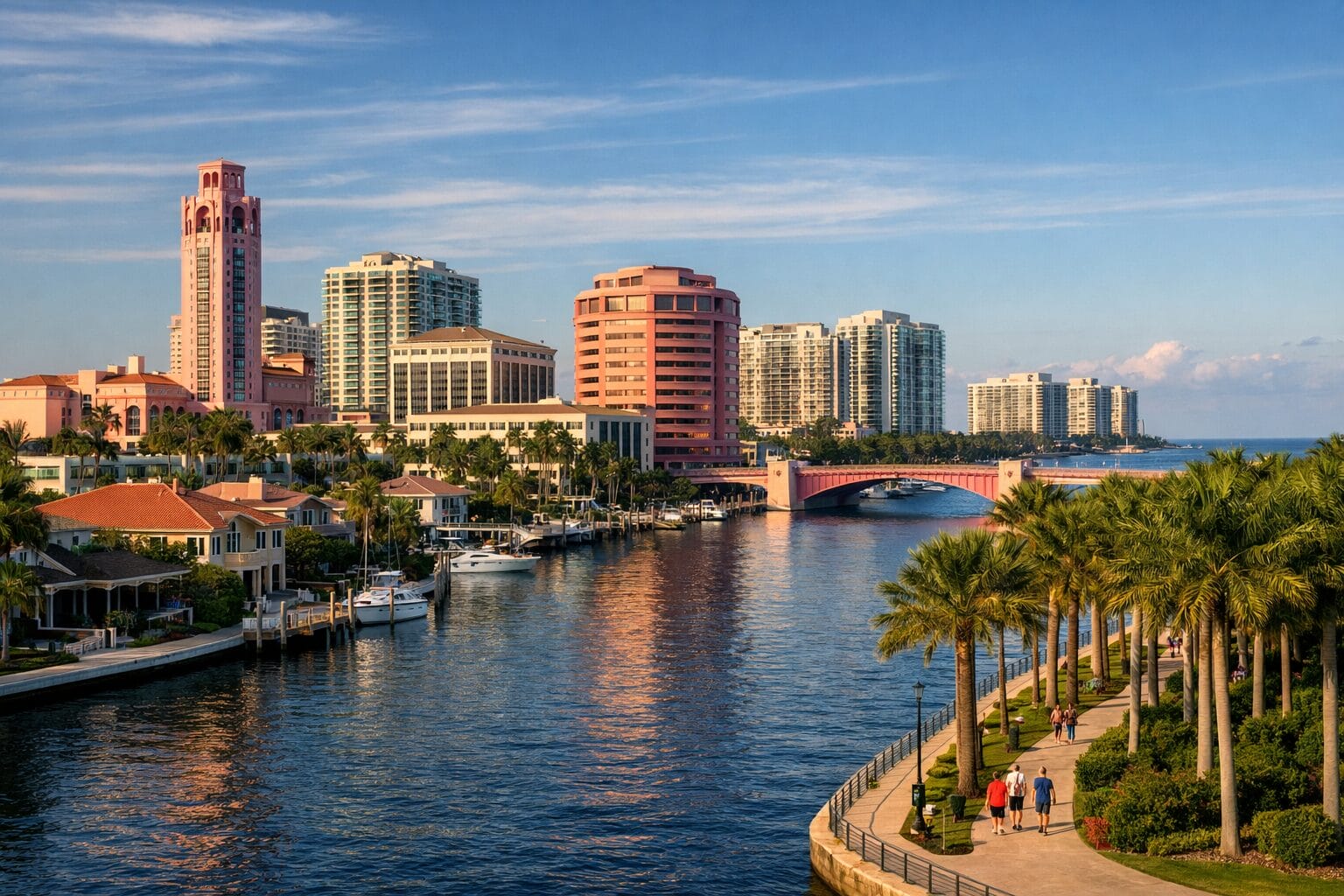

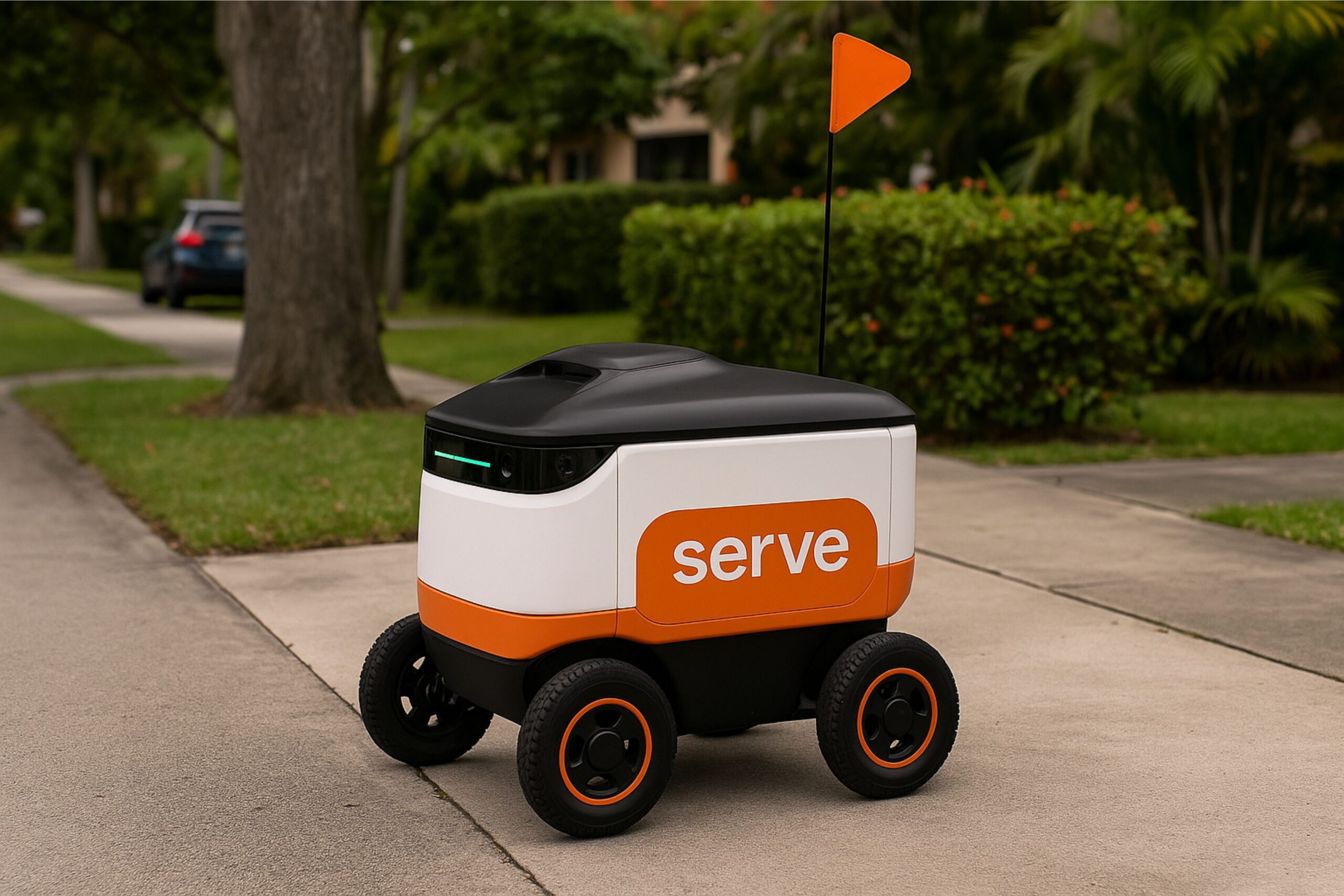
South Florida has a new kind of delivery driver—one that doesn’t require breaks, doesn’t sit in traffic, and doesn’t mind the humidity. Residents of Fort Lauderdale, Wilton Manors, and surrounding neighborhoods may have already spotted them: small, rolling, cooler-sized robots humming quietly along sidewalks, crossing streets, and pulling up to front doors with dinner inside.
These autonomous delivery robots, created by Serve Robotics, are part of a rapidly expanding last-mile delivery service that has officially launched across Greater Fort Lauderdale in partnership with Uber Eats. After years of pilot programs in Los Angeles and other cities, South Florida has become one of Serve’s newest test beds for scalable robotic delivery—an experiment that is quickly turning into everyday reality.
For consumers, the experience feels equal parts futuristic and surprisingly simple. When placing an order through Uber Eats, customers within a defined radius of participating restaurants can opt in for robot delivery. If selected, one of Serve’s sidewalk robots is dispatched, traveling at pedestrian speed—around 3 to 5 miles per hour—to the restaurant, then directly to the customer’s home or office. Upon arrival, the robot sends a notification, and the customer unlocks the compartment through the app to retrieve their order.
Behind the scenes, the technology is far more complex. According to Serve Robotics’ published materials, the bots use a mix of high-definition cameras, lidar, ultrasonic sensors, and onboard computing to interpret obstacles, avoid pedestrians, navigate curb cuts, and safely manage intersections. They communicate continuously with cloud-based systems that offer additional routing, monitoring, and fleet management. While the robots operate autonomously, remote human operators can step in if they encounter an unexpected situation—say, a construction detour or an inquisitive neighborhood dog.
The motivation behind the rollout is clear: South Florida is one of the nation’s fastest-growing delivery markets, with dense downtown corridors, thriving restaurant districts, and a consumer base that increasingly expects fast, low-cost delivery. Serve’s partnership with Uber Eats allows the company to integrate into an existing platform that already handles millions of orders in the region. For Uber Eats, adding robotic couriers reduces delivery times, lowers human labor demands during peak hours, and expands service coverage for short-distance routes.
Businesses are taking notice. Restaurant owners in Wilton Manors and Fort Lauderdale report that the robots tend to handle nearby orders that human drivers often decline—short, low-fee deliveries that aren’t appealing to gig drivers. The robots can complete these runs quickly and reliably, freeing human couriers for longer, higher-value trips. For restaurants, that means fewer delayed or canceled orders and more efficient fulfillment overall.
Local reaction, as expected, has ranged from amused to skeptical. Some residents enjoy the novelty of watching the robots cruise past their homes, likening them to “R2-D2 with a job.” Others express concerns about sidewalk congestion, safety, and the long-term impact on delivery drivers who rely on app-based work. In Miami, where similar robots were introduced earlier, the debate has mirrored what South Florida is seeing now: enthusiasm for technological innovation mixed with questions about regulation, accessibility, and infrastructure.
City officials in many communities nationwide are still figuring out how these robots fit into urban life. Serve’s deployments typically require local approval, and the company has stated that it prioritizes working with municipalities to ensure compliance with sidewalk usage, right-of-way rules, and safety protocols. For Fort Lauderdale and Wilton Manors—two cities that publicly support innovation, tech-forward urban mobility, and sustainable transit alternatives—the robots align with ongoing efforts to modernize local infrastructure.
South Florida’s version of “the future of delivery” may only be in its early stages, but the momentum is unmistakable. Serve Robotics has already signaled it plans to scale into thousands of units across the country, with new markets activating through 2025. If the Fort Lauderdale–Wilton Manors rollout continues smoothly, residents can expect to see more of these compact couriers gliding past joggers, dog walkers, and cyclists in the months ahead.
For now, they’re still something of a spectacle—neighborhood celebrities on wheels. But given the speed of adoption and the appetite for convenience, it’s likely only a matter of time before South Florida stops asking, “Why is there a robot on my sidewalk?” and starts wondering what life was like without them.