
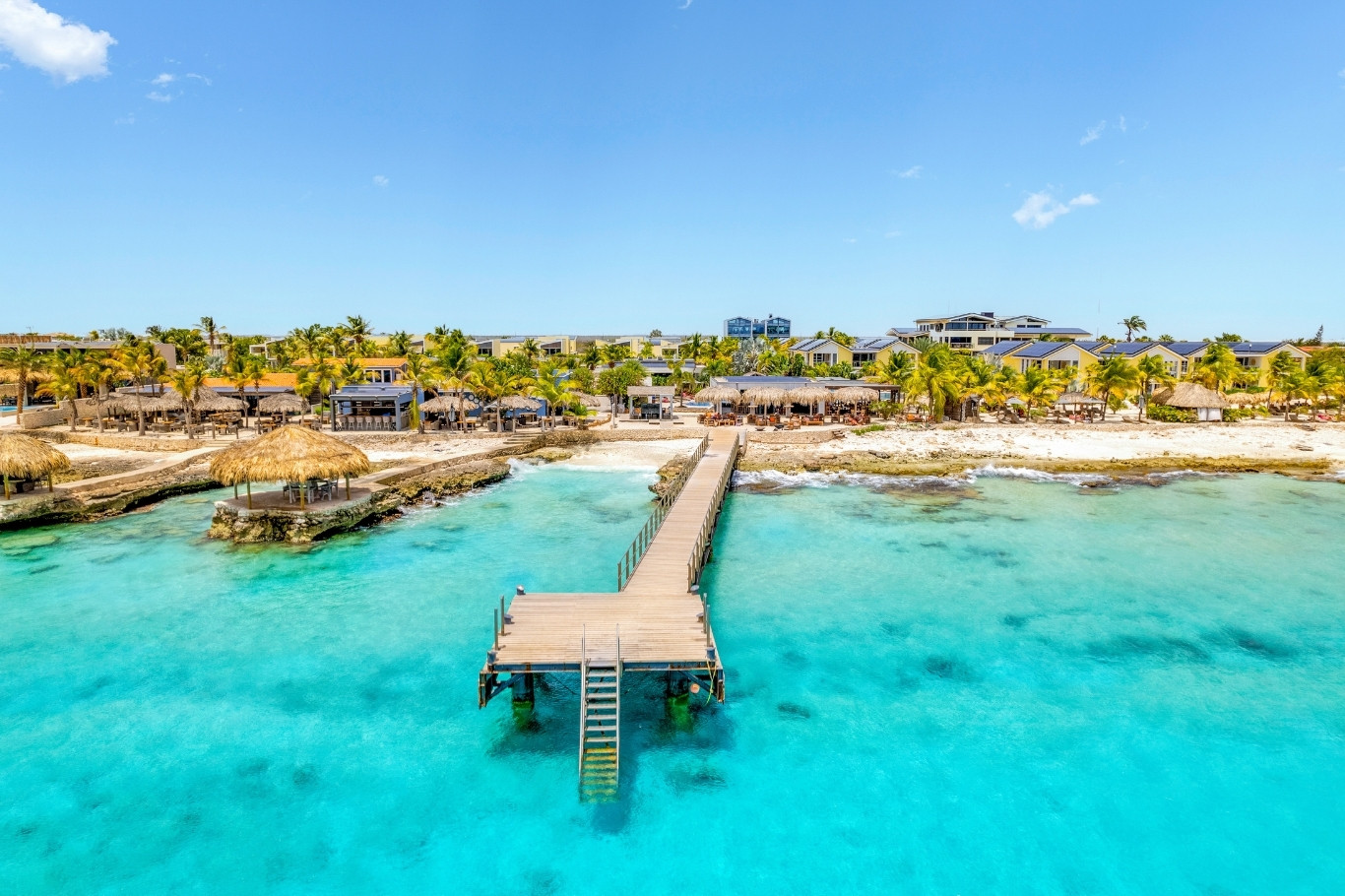
A nonstop flight from Miami leads to a Caribbean island unlike most others. At just 114 square miles, Bonaire trades the familiar palm-lined sameness for something more varied: protected coral reefs and world-class shore diving alongside cactus-studded desert, limestone caves, flamingo-filled salt flats and quiet mangrove forests, all outside the Caribbean’s main hurricane belt. On the island’s southwestern coast, Delfins Beach Resort Bonaire, Tapestry Collection by Hilton, serves as an oceanfront base for taking it all in.
The 148-room resort pairs direct access to Bonaire’s natural adventures with a private beach, two outdoor magnesium pools and beachfront wellness, along with an on-site dive center and a dining lineup built for lingering. The newly renovated Brass Boer Bonaire, created by the team behind the three-Michelin-starred De Librije in the Netherlands, anchors the resort’s elevated end, while colorful Café Koló covers breakfast, lunch and dinner in a more relaxed register. Round out the day at the beachfront Club Tropicana and Roast Tropicana, where morning coffee gives way to sunset cocktails.
Accommodations scale from guest rooms and studios to one-, two- and three-bedroom apartments, penthouses and private oceanfront villas, many with kitchenettes, generous outdoor living space and views of the Caribbean Sea or the resort’s tropical gardens, suited to everything from a long stay to a quick weekend away.
Bonaire’s identity extends well beyond any single property. Recognized as the world’s first “Blue Destination,” the island protects 20 percent of its land and 100 percent of its surrounding waters, helping preserve some of the healthiest reef systems in the Caribbean.
That reef health is what draws serious divers in the first place. With more than 85 marked dive sites, including 54 reachable directly from shore, Bonaire has earned its reputation as the shore-diving capital of the world. The system is low-tech: follow the island’s distinctive yellow roadside markers, park, gear up and walk into the water. At Delfins Beach Resort, guests go deeper through the onsite PADI 5-Star IDC dive center, operated by Dive Friends Bonaire, offering guided excursions, boat and shore dives, equipment rentals, certifications and complimentary introductory pool dives for beginners.
Time a visit for three to four nights after a full moon, and it’s possible to witness one of the island’s more elusive natural phenomena: microscopic ostracods producing synchronized blue-green flashes across the water’s surface, like constellations blinking just beneath the tide.
Diving is only part of the draw. Delfins Beach Resort’s Stay & Drive packages pair a stay with a Suzuki Jimny or scooter, making independent exploration easy. A drive inland reveals the pastel Dutch Caribbean architecture of Kralendijk, towering white salt pyramids and the improbably pink waters of the Pekelmeer salt flats, where thousands of American flamingos gather. More than 250 bird species have been recorded across Bonaire’s varied habitats, making it a quiet draw for birders as much as divers.
For a wilder side of the island, Washington Slagbaai National Park spans roughly 14,000 acres of cactus forest, hidden coves, salt lakes and volcanic coastline. Visitors can hike Brandaris, Bonaire’s highest point, search out native bird species or snorkel from remote, largely untouched beaches within the protected park boundaries.
The adventures keep multiplying from there. In Lac Bay, guided kayak trips wind through narrow mangrove tunnels sheltering a nursery for reef fish, sea turtles and conch before opening into shallow, seagrass-lined water — the same warm, waist-deep conditions and steady trade winds that have made Lac Bay a training ground for world-class Bonairean windsurfers. Inland, wind-powered blokarts send landsailors skimming across the salt flats at speeds approaching 40 mph, while below ground, more than 400 documented caves hold stalactites, stalagmites and Indigenous rock markings.
Less than a mile offshore, uninhabited Klein Bonaire adds one more layer to the island’s protected beauty. The 2.3-square-mile nature reserve has no roads, hotels or permanent residents, only white sand, fringing reefs and an important nesting habitat for endangered sea turtles.
Between its unexpected landscapes, protected natural beauty, destination-worthy dining and adventures both above and below the surface, Delfins Beach Resort makes Bonaire feel refreshingly removed from the everyday, yet from South Florida, comfortably close.
For more information, visit www.delfinsbeachresort.com.