
A veteran physician reflects on leadership, responsibility, and patient care beyond the clinic.
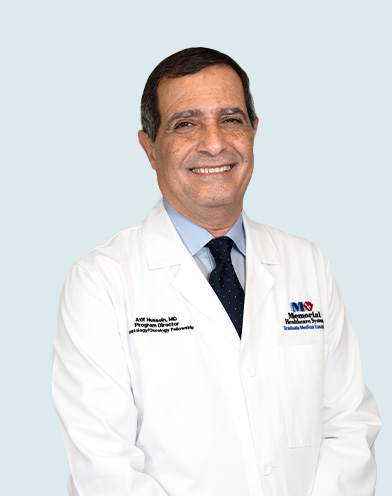
Atif M. Hussein, M.D., Medical Director and Program Director of the Hematology/Oncology Fellowship Program at Memorial Cancer Institute and a member of the Memorial Foundation Board of Directors, reflects on leadership, philanthropy, and the evolving demands of cancer care.
Q: After more than two decades at Memorial, why take on a role with the Foundation board?
I was recruited from Duke 25 years ago to help build what was then a small cancer program. Today, Memorial Cancer Institute includes dozens of specialists, a 125,000-square-foot facility, and recognition as a Cancer Center of Excellence.
Serving on the Foundation board allows me to advocate for what I see every day at the bedside. Medicine alone isn’t enough. Philanthropy bridges the gap between what is possible and what is truly transformative, helping align donor support with research, education, and patient care.
Q: What breakthroughs are being accelerated by donor support?
One priority is establishing a Phase I Clinical Trials Unit, which allows us to offer new treatments to patients years before they are widely available. These trials are complex and resource-intensive, often beyond traditional funding.
We are also advancing immunotherapies, including Chimeric Antigen Receptor (CAR) T-cell treatments for solid tumors and therapies that help the immune system better recognize cancer. These approaches are powerful but require specialized teams, labs, and monitoring.
Because of this complexity, patients often travel far from home for care. Our goal is to offer these treatments locally, allowing patients to remain in their community while accessing leading-edge options.
Q: Why is philanthropy essential to sustaining modern cancer care?
Patient care revenue alone no longer supports the full scope of what cancer programs require. A significant portion of funding must come from philanthropy and grants to sustain growth, innovation, and access.
Q: How does donor support translate into everyday impact for patients?
Access is everything. Through the Memorial Foundation, patients receive help with transportation, utilities, and living expenses. In some months, hundreds rely on this support just to continue treatment.
These are often modest interventions, but they are critical. If a patient cannot get to an appointment or is overwhelmed financially, even the best care cannot succeed.
Philanthropy also addresses deeply personal challenges. We treated a young pregnant patient diagnosed with cancer in her first trimester. With the right support, she completed treatment and today has a healthy child. These are the moments that define the impact.
Q: Why is training the next generation of oncologists so important?
Education is one of our most meaningful investments. Our fellowship program shapes how physicians think, collaborate, and care for patients. Fellows gain experience across community and advanced care settings, preparing them for a wide range of cases.
Our collaboration with Moffitt Cancer Center expands exposure to complex conditions and advanced therapies. Donor support strengthens both education and research, ensuring we train physicians who will serve this community for decades.
Q: What opportunities lie ahead for Memorial Cancer Institute?
Cancer care is moving toward personalized treatment, advanced immunotherapy, and expanded access. Establishing a Phase I research program and investing in infrastructure are key priorities. These efforts will reduce wait times and allow us to serve more patients with complex needs.
Q: What would you want donors to understand about their impact?
Their support changes lives, both immediately and long term. Philanthropy enables innovation, education, and compassionate care. It ensures that when someone hears “you have cancer,” they can also hear that world-class care is available close to home.